Podcast Clips for Social Media: Turning One Episode into Ten Reels
One good hour of conversation holds at least ten strong podcast clips for social media. The trick is planning for them before you shoot, then cutting each one around a single moment.
Most brand podcasts in Egypt get more views from their clips than from the full episode. Nothing is wrong with that; it's how people find shows now. Someone sees forty seconds of a sharp answer on Instagram, gets curious, and goes looking for the rest on YouTube.
Which means podcast clips for social media should be planned with the episode, not squeezed out of it afterwards. They're half the reason the episode exists. And one decent hour of conversation almost always holds ten clips worth posting, if you know how to find them and plan for them before the cameras roll.
This is how we approach it when we produce shows through our podcast and show production service.
Here's what this covers:
- Plan the clips before you shoot
- How to find the ten moments
- The first two seconds decide everything
- Vertical framing from a wide shoot
- Captions, Arabic and English
- Where each clip goes
- A posting schedule for one episode
- Try it on your last episode
Plan the clips before you shoot

The best clips come from questions designed to produce them. When you write the run sheet, mark a few questions as "clip questions": the ones likely to get a strong opinion, a surprising number, a personal story or a clear piece of advice.
"What's the biggest mistake new clinic owners make?" will get you a clip. "Tell us about your career" usually won't.
Brief the host to ask these clearly and let the guest finish without interrupting. Overlapping voices are the main reason a great moment can't be clipped. It's also worth asking guests to repeat the question in their answer: "The biggest mistake is..." instead of "Honestly, it's pricing." That way the clip makes sense on its own, without the question before it.
How to find the ten moments
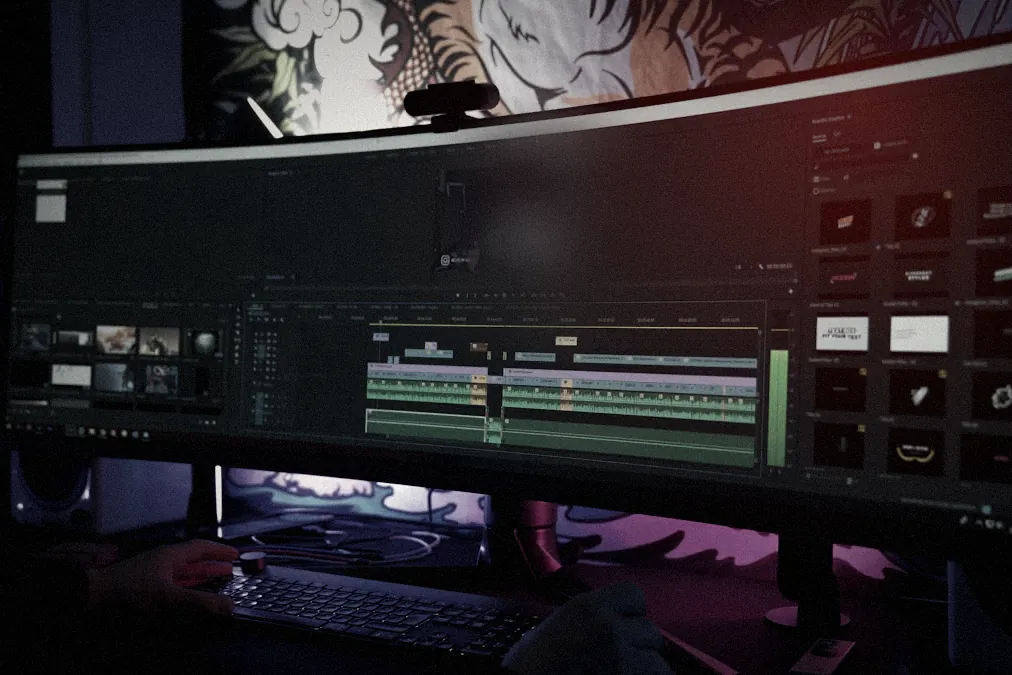
Watch the full episode once with a notepad. Note the timecode every time you react: you laughed, you learned something, you disagreed, you wanted to send it to someone. Those are your clips.
Most good clips fall into a few types:
- A strong opinion that some people will disagree with
- A specific tip people can use today
- A short personal story with a turn in it
- A surprising fact or number (one the guest actually knows, not a guess)
- A funny exchange between host and guest
- A clear answer to a question your customers ask every day
Each clip should hold one idea. If you need to explain the context for ten seconds before it makes sense, it's not a clip, it's part of the episode.
The first two seconds decide everything

On a feed, people decide almost instantly whether to keep watching. So never start a clip with "So, um, I think..." Start on the strongest line.
Often that means moving the best sentence to the front. Open with the punchline, then show the build-up. "Most restaurants in Zayed lose money on delivery" is a hook. The explanation that follows is why people stay.
Add a short text line at the top of the frame that says what the clip is about, in a few words. Keep it readable and away from the edges, where Instagram and TikTok put their buttons.
Vertical framing from a wide shoot

Full episodes are horizontal. Clips are vertical. If the shoot wasn't planned for both, the editor ends up cropping someone's face in half.
When we set up a podcast shoot, we frame each speaker's close shot with room on both sides, so a 9:16 crop still looks clean. Keep the speakers far enough apart that each can be cropped alone. Keep the background simple behind each person, because in a vertical crop the background is right next to their face. If you're planning a multi-camera setup, our guide to multi-camera podcast shoots explains how to place cameras for both formats.
Cutting between angles inside a clip keeps it moving. A close-up on the guest, a reaction from the host, back to the guest.
Captions, Arabic and English
Burn the captions into the video. Auto-captions on the platforms are improving, but they still make mistakes with Egyptian Arabic, names and English terms mixed into Arabic sentences, which is how many people here actually talk.
A few rules that save a lot of back-and-forth:
- Write captions the way the person spoke. Don't turn Egyptian dialect into formal Arabic.
- Keep English brand names and technical terms in English if that's how they were said.
- Two lines maximum on screen, large and clear, with enough contrast to read in sunlight.
- Check every name and number. A misspelled guest name on a public clip is embarrassing.
If your audience is mixed, decide per clip. A finance tip for B2B buyers might work best with English captions, while a clip for a clinic's patients should probably be in Arabic.
Where each clip goes
Instagram Reels is usually the main stage for Egyptian brands. Reels can now run up to three minutes, but shorter clips are easier to finish. TikTok rewards strong hooks and personality. Facebook still reaches older audiences that Instagram misses. YouTube Shorts brings viewers directly into the channel where the full episode lives.
You can post the same clip on all four. Just change the caption for each platform, pick a cover that works in each grid, and upload the clean file, not one downloaded from another app with its watermark. Instagram's trial reels, which show a reel to non-followers first, are a handy way to test a riskier clip before it hits your main grid.
A posting schedule for one episode
Say you publish a full episode every two weeks and get ten clips from each. That's about five clips a week, which keeps a feed alive between episodes.
A rhythm that works for many brands:
- Day of release: the strongest clip, with a clear line pointing to the full episode on YouTube.
- Over the next ten days: one clip every day or two, mixing types (a tip, an opinion, a story).
- Save one or two evergreen clips for slow weeks or to reuse later.
Clips with clear advice also make good material for paid ads. If one clip gets unusual saves and shares, put a small budget behind it.
Try it on your last episode
You don't need a new shoot to practice. Open your last episode, or any long recording you have, and go through it with the notepad method above. Most people find six or seven usable moments in something they thought was "just okay".
Then, before your next shoot, write three clip questions into the run sheet. If you want the full pipeline, from the shoot to ten captioned clips per episode, that's exactly what our video podcast production service delivers. And if you're still weighing the whole idea, read should your brand start a podcast or see the full podcast production process.
How long should podcast clips be for social media?
Most land between 20 and 90 seconds. Make each clip as long as the moment needs and no longer.
How many clips can I get from one podcast episode?
A well-planned hour usually gives five to ten strong clips, sometimes more. A weak episode might give two.
Should podcast clips have captions?
Yes. Many people scroll with the sound off, and burned-in captions also help people follow fast speech or mixed Arabic and English.
Can I post the same clip on Instagram, TikTok and YouTube Shorts?
Yes, but adjust the caption and cover for each platform, and upload a clean file without another app's watermark.
Do I need a separate shoot to get vertical clips?
No, if the episode is filmed with vertical framing in mind. Wide shots that leave room around each speaker can be reframed to 9:16 in the edit.
Need this thinking for your brand?
Get a quote